TrueAlarm Photoelectric Sensor Supporting Nationwide Fire Alarm Projects
- Quickship Fire
- Jan 23
- 5 min read

Introduction
I’ve worked on a lot of fire alarm projects over the years, and honestly, there are certain devices you just end up trusting more than others. The first time I installed a TrueAlarm photoelectric sensor, it wasn’t because of marketing or specs on a brochure. It was because a senior tech I respected said, “This one just works. Less callbacks. Fewer headaches.” That stuck with me.
From small office buildings to massive hospital expansions, I’ve seen how much the right smoke detection technology can affect not just code compliance, but real safety and real peace of mind. And when you’re dealing with nationwide fire alarm projects, consistency and reliability become even more important.
Why Nationwide Projects Need More Than “Good Enough”
When you’re working across multiple states, jurisdictions, and inspection authorities, things get complicated fast. One city wants this sensitivity level. Another wants a specific protocol. Another inspector has their own checklist they’ve been using for 20 years.
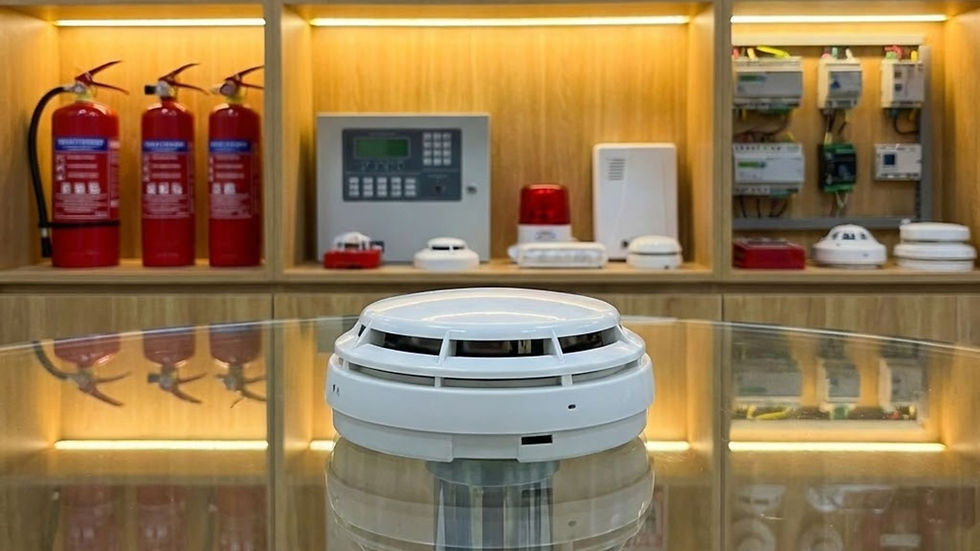
This is where the TrueAlarm photoelectric sensor earns its place. It’s not just about detecting smoke. It’s about doing it in a way that inspectors trust, engineers respect, and installers don’t dread dealing with.
From my experience, nationwide projects live or die by:
Consistency across sites
Predictable performance
Easy integration with addressable systems
Minimal nuisance alarms
And yes, the TrueAlarm photoelectric sensor checks those boxes more often than most.
Real-World Installations: Where It Actually Shines
I remember a multi-state retail rollout where we had over 200 locations. Different ceilings, different HVAC setups, different dust levels. The first few stores used mixed detector brands. Big mistake.
False alarms started rolling in. Store managers were angry. Corporate was breathing down our necks.
Once we standardized on the TrueAlarm photoelectric sensor, the difference was noticeable within weeks. Fewer nuisance alarms. Smoother inspections. Techs stopped calling in frustrated.
That kind of consistency matters when you’re managing scale.
How It Compares to Other Detection Options
There are plenty of detectors out there. Ionization, heat, multi-criteria, you name it. But in most commercial environments, photoelectric still makes the most practical sense.
What I’ve noticed with the TrueAlarm photoelectric sensor is how well it balances early detection with resistance to false triggers. Dust, light steam, and minor airflow changes don’t seem to mess with it as much.
And let’s be real fewer false alarms means:
Less system downtime
Fewer angry phone calls
Better reputation for your fire alarm company
That’s not just technical value. That’s business value.
Where the TrueSense Photoelectric Smoke Detector Fits In
I’ve also worked on projects using the TrueSense Photoelectric Smoke Detector, especially in mixed-use buildings. It’s solid. No doubt about that.
In some retrofits, the TrueSense Photoelectric Smoke Detector is easier to match with existing systems, depending on what panel you’re dealing with. It gives you flexibility.
That said, for large standardized rollouts, I still lean toward the TrueAlarm photoelectric sensor because of how smoothly it plays with addressable networks and how predictable its behavior is.
I’ve even seen projects where both were used the TrueSense Photoelectric Smoke Detector in certain zones and TrueAlarm devices in others. It’s not always one-size-fits-all.
Addressable Systems and the photo Addressabl Smoke Detector Role
Addressable systems changed the game. Instead of guessing which zone triggered, you know exactly which device went into alarm.
That’s where a photo Addressable Smoke Detector setup becomes a huge operational advantage.
On big campuses or high-rise buildings, when a photo Addressable Smoke Detector goes off, maintenance teams can respond faster and smarter. No more wandering around with radios trying to find the source.
Pair that with the TrueAlarm photoelectric sensor, and you get detailed data, device-level identification, and cleaner system management.
I’ve seen a single photo Addressable Smoke Detector save hours of troubleshooting during commissioning.
Installation Experience (The Stuff Nobody Talks About)
Spec sheets don’t tell you how annoying a device is to install. But techs know.
From my experience, the TrueAlarm photoelectric sensor is installer-friendly. The bases are solid. The locking mechanisms feel reliable. You’re not constantly worried about loose fits or flaky connections.
Small things, sure. But when you’re installing hundreds of units, those small things add up to real labor savings.
And if you’re doing night shifts in occupied buildings, easy installs matter even more.
False Alarms, Dust, and Real Life Conditions
Let’s be honest most buildings are not clean rooms.
Construction dust, HVAC changes, steam from kitchens, even seasonal humidity shifts can mess with detectors. I’ve seen cheaper detectors lose their minds over light dust.
The TrueAlarm photoelectric sensor tends to handle these real-world conditions better. Not perfectly no detector is magic but better than average.
In schools and healthcare facilities especially, this matters. You don’t want evacuations because someone burned toast or maintenance kicked up drywall dust.
Engineering and Design Teams Trust It
When fire protection engineers specify equipment, they’re thinking long-term. Serviceability. Compatibility. Code interpretation.
I’ve noticed that when engineers call out the TrueAlarm photoelectric sensor, it’s usually because they’ve been burned before by inconsistent devices.
It becomes a safe choice. A conservative choice. And in fire protection, conservative is often a compliment.
Scaling Across States Without Losing Your Mind
One of the hardest parts of nationwide projects is training. You can’t retrain every crew for every different detector type.
Standardizing on the TrueAlarm photoelectric sensor simplifies training. Techs know what to expect. PMs know how long installs will take. Inspectors recognize the device.
That familiarity reduces friction. And friction is what kills timelines.
Mixing Technologies When It Makes Sense
I’m not saying everything has to be TrueAlarm all the time.
There are times when a photo Addressable Smoke Detector from another line or a TrueSense Photoelectric Smoke Detector makes more sense for a specific application.
But for the backbone of large projects, the TrueAlarm photoelectric sensor tends to become the default because it’s predictable. And predictability is gold when you’re managing dozens of job sites.
FAQs
Is the TrueAlarm photoelectric sensor good for dusty environments?
It’s better than most, but no detector loves dust. Regular cleaning still matters.
Can I mix TrueAlarm with other brands?
Yes, depending on your panel and system design. Just make sure compatibility is confirmed.
How does it compare to the True Sense Photoelectric Smoke Detector?
Both are solid. TrueSense can be great for certain retrofits, but TrueAlarm is often preferred for large standardized systems.
Is a photo Addressable Smoke Detector always better than conventional?
For large buildings, yes. The device-level info saves time and money.
Conclusion
At the end of the day, fire alarm projects aren’t just about equipment. They’re about trust. Trust that the system will work. Trust that inspectors will approve it. Trust that you won’t get that 2 a.m. phone call because of another false alarm.
That’s why I keep coming back to the TrueAlarm photoelectric sensor. Not because it’s flashy. Not because it’s the cheapest. But because, from real-world installs, it just holds up.


Comments